
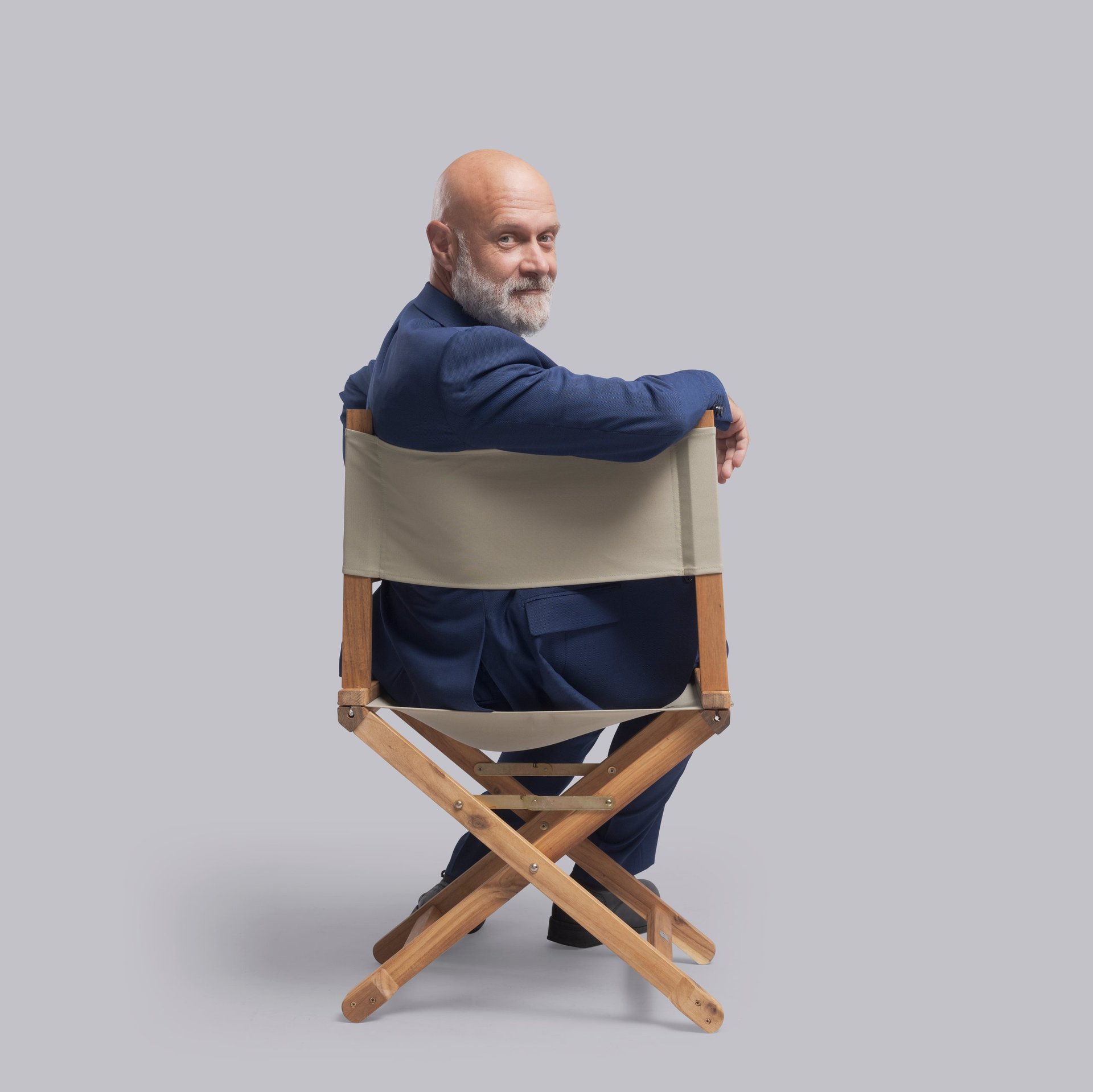
The Architect of Cinematic Dreams
London Roots & Independent Spirit
Born in London in 1970, Christopher Nolan began making films at age seven with his father's Super 8 camera. After studying English Literature at University College London, he poured his energy into filmmaking—creating shorts and features on minimal budgets while his contemporaries attended film school.
His early features Following (1998) and Memento (2000) announced a filmmaker obsessed with time, memory, and subjective perception. Memento's reverse-narrative structure was a calling card that would define his career.
Conquering Hollywood
Nolan's genius was recognizing that mainstream audiences craved intelligence. Batman Begins (2005) and The Dark Knight (2008) redefined superhero cinema, proving that comic book films could be dark, complex, and artistically ambitious.
His refusal to use CGI where practical effects could work, his insistence on shooting on film (including 65mm IMAX), and his resistance to digital post-production created a distinctive visual signature that audiences recognized even in commercial theaters.
The Space-Time Trilogy
Inception (2010) was Nolan's magnum opus of ideas—a heist film inside a dream inside a dream. Its spinning hallway corridor became iconic, and Hans Zimmer's brass-heavy score revolutionized blockbuster soundtracks.
Interstellar (2014) pushed further into cosmic territory, using Kip Thorne's scientific expertise to ground its black holes and wormholes in real physics. The result was both emotionally devastating and intellectually stimulating.
Tenet (2020) completed the trilogy with temporal inversion—a concept so complex it challenged audiences and critics alike. Love it or hate it, no one could accuse Nolan of playing it safe.
Oppenheimer: The Masterpiece
After decades of being overlooked by the Academy, Oppenheimer (2023) finally earned Nolan his first Oscar for Best Director. The three-hour biographical epic about the father of the atomic bomb was a masterpiece of restraint and devastation.
Mixing color IMAX for Oppenheimer's subjective experience with black-and-white for courtroom drama, Nolan's visual language reached new heights. Cillian Murphy's career-defining lead performance and Ludwig Göransson's haunting score completed one of cinema's greatest achievements.
The Nolan Philosophy
Nolan's films share recurring themes: the subjectivity of memory, the nature of time, fathers and daughters, sacrifice for love, and the weight of guilt. But his approach is never didactic—these themes emerge through genre entertainment, never feeling like lectures.
His technical innovations—practical effects, in-camera stunts, shooting in chronological order for emotional authenticity—have influenced a generation of filmmakers. At a time when studios embrace CGI shortcuts, Nolan reminds us that physical reality creates irreplaceable verisimilitude.
Legacy & Future
Christopher Nolan has accomplished the impossible: making intellectual cinema commercially viable. His films routinely gross over $1 billion while challenging audiences with complex narratives and ambitious ideas.
At 54, he remains Hollywood's most prestigious director. His next project—reportedly a historical epic—proves once again that Nolan's ambition knows no bounds. The man who brought us dream-heists and space odysseys continues to prove that the most cerebral films can also be the most thrilling.